Girona Cycling Guide: Routes, Tips & Everything You Need to Know
Discover Girona’s best cycling routes with maps and measured climbs, a suggested week day by day, and practical tips for planning your ride through Spain’s top cycling region.

Quick links
Don't want to read all this?
We've planned 800+ cycling trips. Send your dates, fitness and group size — we'll map the route and book every night.


Girona sits 100 km north-east of Barcelona, between the Costa Brava and the first hills of the Pyrenees. From the old town you can be on a quiet lane in ten minutes, on the coast road in an hour, and at the top of a forest climb by lunch. More than 100 professional riders train from Girona, and the roads are why.
This guide gives you the rides, not the brochure. Seven routes with measured distance, climbing and surface, the climbs that matter and how to plan the trip around them. Every tour we run here, with the best months and where you sleep, is on Girona Cycling Holidays.

The best cycling routes in Girona
All seven start from the city unless the facts line says otherwise. Distances are for the full loop, measured in October 2026 from the waypoints named in each route.
1. Els Àngels loop
Some Facts
Distance: 55 km
Climbing: 720 m
Start/End: Girona
Surface: paved
Route: Girona – Quart – Els Àngels – Madremanya – Monells – Girona
The ride everyone does first. Out through Quart, then an 11 km climb that averages under 4 per cent to the Santuari dels Àngels, where the terrace looks back over Girona and the plain.
The descent to Madremanya and the lanes to Monells are the prettiest 20 km near the city. Good as a first day, a recovery day, or the warm-up before a bigger week.
Road surface is excellent the whole way and the climb is shaded through forest for most of its length, so it works on a hot afternoon too.
To fit Els Àngels into a full week, join our Girona Gravel tour: its second day climbs to the sanctuary on the way east to L'Escala.
2. Mare de Déu del Mont
Some Facts
Distance: 115 km (57 km each way)
Climbing: about 1,800 m
Start/End: Girona
Surface: paved, narrow near the top
Route: Girona – Banyoles – Besalú – Beuda – summit and back
The long day. North across the plain to Banyoles and Besalú, then a sustained ascent to the sanctuary at the summit, with the last kilometres on a narrow road through forest.
22 km of climbing from Besalú at about 4.5 per cent, close to 1,000 m in one go.
Carry enough water for the whole climb; fill up in Besalú.
Views to the Pyrenees on a clear day and the whole bay of Roses below.
Big-mountain riding without going into the Pyrenees. The approach matters as much as the climb: 35 km of rolling lanes through Banyoles and Besalú before the road tips up, and the same lanes home with tired legs. Plan it for the middle of the week, not the first day, and start by nine in summer.
Our cycling guides recommend the paved road through Beuda, the line on this map, because some route planners cut across on a footpath that is no place for a road bike.
3. Costa Brava coast road to Tossa de Mar
Some Facts
Distance: 110 km
Climbing: 1,530 m
Start/End: Girona
Surface: paved
Route: Girona – Santa Cristina d'Aro – Sant Feliu de Guíxols – Tossa de Mar – Llagostera – Girona
Inland first to Santa Cristina d'Aro and down to Sant Feliu de Guíxols, then the reward: the road from Sant Feliu to Tossa de Mar follows the cliffs for 20 km of bends, short rises and open sea. The Sant Feliu–Tossa road is the most photographed stretch of tarmac in Catalonia for a reason — ride it clockwise so the sea is on your right and the lay-bys are on your side. Lunch on the front in Tossa, then a long climb out of town towards Llagostera and familiar lanes home.

On our Girona & Costa Brava week this is two days rather than one, with a night at the sea in Tossa de Mar.
Arriving from Barcelona? Barcelona to Girona offers this coast as one of two final-day rides; the other loops through the Empordà villages.
4. Medieval villages loop: Monells, Peratallada, Pals
Some Facts
Distance: 75 km from Girona (83 km with Pals and Ullastret added; 47 km from a village base)
Climbing: about 500 m
Start/End: Girona or a Baix Empordà village
Surface: paved
Route: Girona – Monells – Peratallada – Púbol – Girona
Flat to gently rolling farm lanes between stone villages. Monells, Peratallada and Pals sit within 12 km of each other, so the ride can be a 47 km morning from a village base or a 75 km day from Girona with Ullastret and the rice fields of Pals added.
This is the easy Girona ride: vineyards, farmhouses, almost no cars, a café in every village square. Riders of every level, and the one to pick on a hot afternoon.
Worth the extra kilometres: Peratallada's moat and walls, the medieval centre of Pals above the rice fields, and Púbol, where Gala Dalí's castle sits on the lane back towards Girona.
We offer two ways round: the main loop from Girona, or the lighter line on the map, which adds Pals, Ullastret and the rice fields.
5. Sant Feliu de Guíxols to Llafranc along the coast
Some Facts
Distance: 34 km one way to Tamariu
Climbing: 340 m
Start/End: Sant Feliu de Guíxols → Llafranc and Tamariu
Surface: paved
Route: Sant Feliu – Platja d'Aro – Palamós – Calella de Palafrugell – Llafranc – Tamariu
Short but never flat: a coast road that climbs and drops between every cove — Sant Feliu, Platja d'Aro, Palamós, Calella de Palafrugell, Llafranc. Swim at Tamariu at the far end. Best early, before the beach traffic.

Ride it back the same way for a 68 km day, pair it with route 3 for a coast weekend based in Sant Feliu, or do it as the easy day after Mare de Déu del Mont.
Our cycling guides recommend staying on the road line shown here rather than the camí de ronda, the coastal footpath with steps between the coves.
6. Cap de Creus peninsula
Some Facts
Distance: 50 km from Roses, 16 km from Cadaqués
Climbing: 975 m from Roses, 415 m from Cadaqués
Start/End: Roses or Cadaqués
Surface: paved, rough in places
Route: Roses – Cadaqués – Cap de Creus lighthouse – Cadaqués – Roses
The wildest ride in this guide and the only one you drive or train to. From Roses the road climbs over the headland to Cadaqués, then out to the lighthouse at Cap de Creus, the easternmost point of mainland Spain.
Exposed, treeless and windy — check the forecast for tramuntana days.
Bare rock, short punchy climbs, and a sea on both sides of the road.

Cadaqués is the lunch stop and the reason to go slowly: white houses, Dalí's house at Portlligat round the headland, and a harbour front for coffee. Start from Roses for the full 50 km or from Cadaqués for the 16 km version with the lighthouse and the headland only. Our Girona Gravel tour rides the peninsula on its third day.
If you want the peninsula without the drive, Cycle Tour Catalonia sleeps in Cadaqués and crosses Cap de Creus the next morning on its way to L'Escala.
7. Via Verda del Carrilet, Girona to Olot
Some Facts
Distance: 55 km one way
Climbing: about 550 m, a steady railway gradient
Start/End: Girona → Olot
Surface: packed gravel greenway
Route: Girona – Amer – Les Planes d'Hostoles – Olot
An old railway line turned greenway, following the Ter and Brugent valleys up to the volcanoes of La Garrotxa. Car-free from the first kilometre to the last, fine on a gravel, touring or hybrid bike, and the answer if someone in the group does not want traffic at all. The sister greenway runs the other way, about 40 km from Girona to the sea at Sant Feliu de Guíxols.
Ride it uphill to Olot and arrange a transfer back, or do the two greenways end to end as a two-day sea-to-volcanoes ride with a night in Girona in the middle. Our Girona Gravel tour spends its fifth day in the same volcano country.
Prefer to roll mostly downhill? Take a transfer to Olot first and ride this line the other way, back to Girona.
The climbs
Girona's reputation rests on three climbs. We measure them section by section on Rocacorba Climb: Girona's Famous Ascent, Section by Section, which also covers how hard it really is and which of our tours ride it. In short:
Rocacorba, from the Matamors bridge west of Banyoles: 9.8 km, 744 m, 7.4 per cent — the test piece, 13 per cent ramps at km 5 to 6, radio masts at the top.
Els Àngels, from Girona: 11 km at under 4 per cent — the social climb, terrace at the sanctuary.
Mare de Déu del Mont, from Besalú: 22 km, about 1,000 m, 4.5 per cent — the big day, a sanctuary at the top.
Sant Grau, from Llagostera: 13 km, 380 m — the hill road to the coast between Llagostera and Tossa.
Fill both bottles in the last village before each climb. Which climb on which day: Els Àngels first, Rocacorba when your legs are fresh, Mare de Déu del Mont as the one big day, Sant Grau as the price of the coast road. Rocacorba is on the sixth day of our Girona Gravel tour; the Girona & Costa Brava week passes its foot at Banyoles on day two without climbing it.
A week of riding in Girona, day by day
If you want the best of these routes in one trip, this is how we would string them together: a week that starts in the hills north of Girona, crosses to the coast and comes back over Els Àngels.
Day 1: Girona to Serinyà. Arrive in Girona and transfer to Serinyà, a village north of the city, where the bikes are waiting. You stay two nights.
Day 2: Banyoles loop. Three loops from the door: about 45 km around the lake, 60 km with the climb to Mare de Déu del Mont, or 85 km into the hills north of Banyoles.
Day 3: Serinyà to El Port de la Selva, 70 km. East across the Empordà plain past Figueres, then up into the Cap de Creus natural park and down to the sea.
Day 4: El Port de la Selva to Madremanya, 70 km. A climb out of the bay, flat farm roads south across the Empordà, and a night in a stone village.
Day 5: Madremanya to Tossa de Mar, 60 km. Over the wooded hills of Les Gavarres to the sea, then the coast road from Sant Feliu de Guíxols to Tossa de Mar, route 3 above.
Day 6: Tossa de Mar to Girona, 80 km. The biggest day: inland through the cork-oak hills of Les Gavarres, with a shorter option, and back into Girona over Els Àngels, route 1.
Day 7: Departure. Time for the old town before you leave: the cathedral, the city walls and the river.
Or skip the hassle of planning and let us handle everything for you on the Girona & Costa Brava Cycling Highlights tour.
Terrain and surfaces
Three kinds of riding, all within an hour of the old town.
Rolling farm lanes make up most Girona rides. The Empordà plain north and east of the city is vineyards, sunflowers and villages joined by lanes with almost no traffic. This is where the daily training happens, not on the famous climbs.
The coast road is paved, narrow and busy from July to August. Spring and autumn it is empty by nine in the morning.
Les Gavarres, between Girona and the sea, is the gravel. Wide forest tracks and farm roads, loops of any length, a 40 mm tyre is enough. Our Girona Gravel Cycling Holidays cross it on the way to the coast.
Road surfaces are good almost everywhere. The exceptions are the last kilometres of Mare de Déu del Mont and the Cap de Creus headland, both rougher and both worth it.
Two greenways cover the fourth kind of rider, the one who wants no cars at all: the Carrilet to Olot (route 7) and its twin to Sant Feliu de Guíxols. Together they cross the province from the volcanoes to the sea on packed gravel.

Getting there
Barcelona El Prat (BCN) is the airport for most long-haul and year-round flights. From the airport take the R2 Nord train to Barcelona Sants, then the high-speed AVE or AVANT to Girona — under 40 minutes for the fast leg and about 1.5 hours door to door. Renfe sells the AVE and AVANT tickets on its website and in its app. By car it is 100 km on the AP-7, about an hour.
Girona–Costa Brava (GRO) is 12 km from the city and the easier option when a seasonal flight exists; the airport bus and taxis take 20 minutes. To compare and book flights into both airports, use Skyscanner.
By bus: Sagalés runs buses from Barcelona El Prat to Girona, or take a shuttle to the city and an intercity bus from Barcelona. From Girona airport the Sagalés shuttle goes to Girona bus station, next to the railway station. By car from Girona airport it is a straightforward 15-minute drive.

Bringing your own bike: both airports handle bike boxes. Check your airline's rules and book bike carriage with it before you fly. Or rent in Girona, which has one of the densest clusters of rental shops in Spain; on our tours a rental road or gravel bike can be arranged for the start of the trip.
For documents, money and the rest, see our guide to cycling in Spain.
When to go
March to June and September to October are the months to ride Girona: 15–27 °C, dry, quiet roads and long light. July and August work on the coast and for early starts, but inland climbs are hot by eleven. December to February is rideable at the coast and cold on the hills, with ice possible on the high roads. Month by month, with what each tour looks like in each season, is on Girona Cycling Holidays.

Where to stay
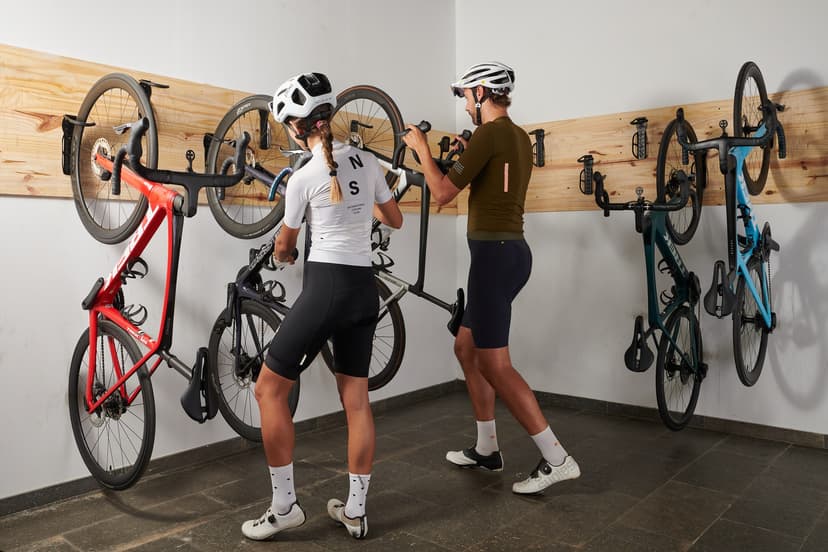
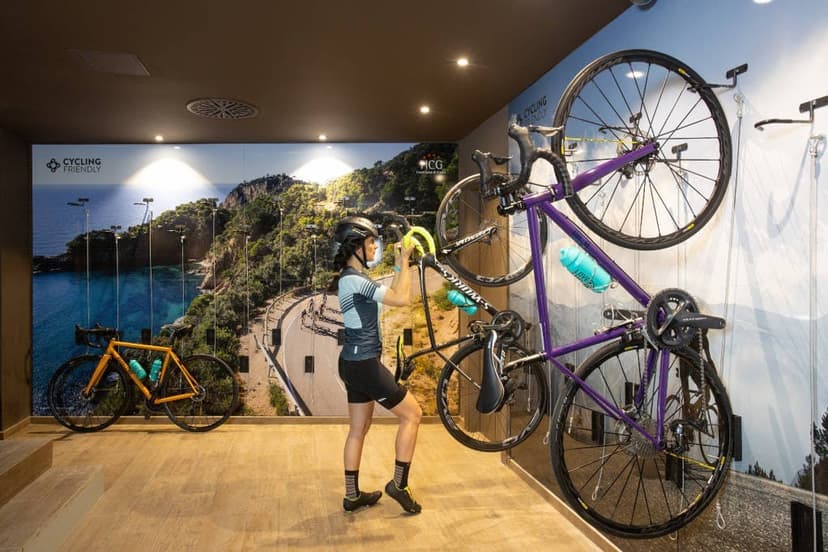
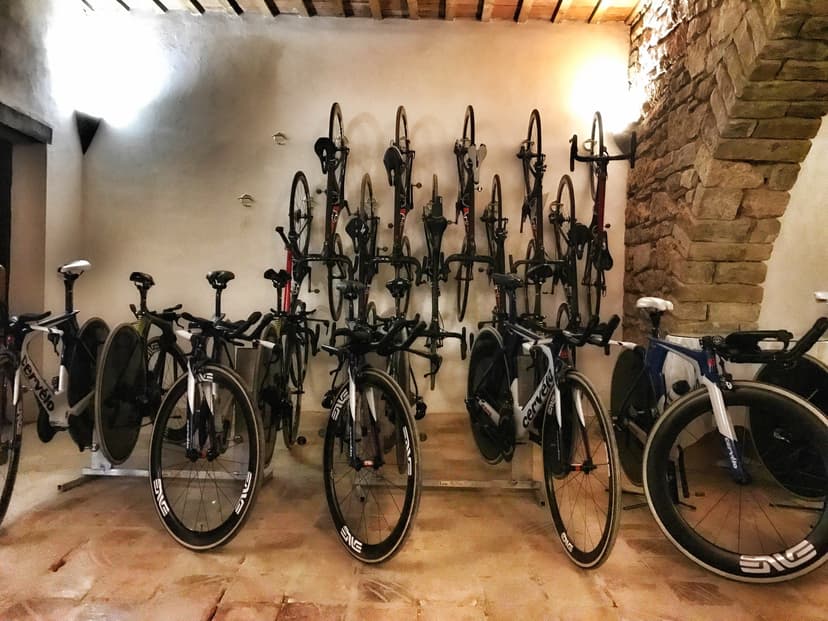
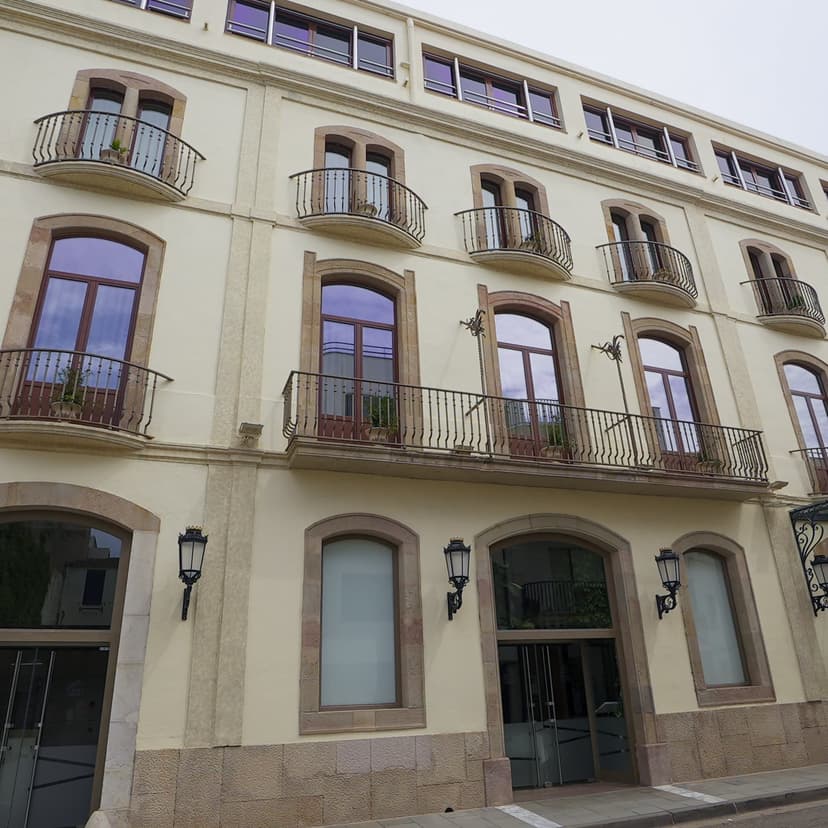
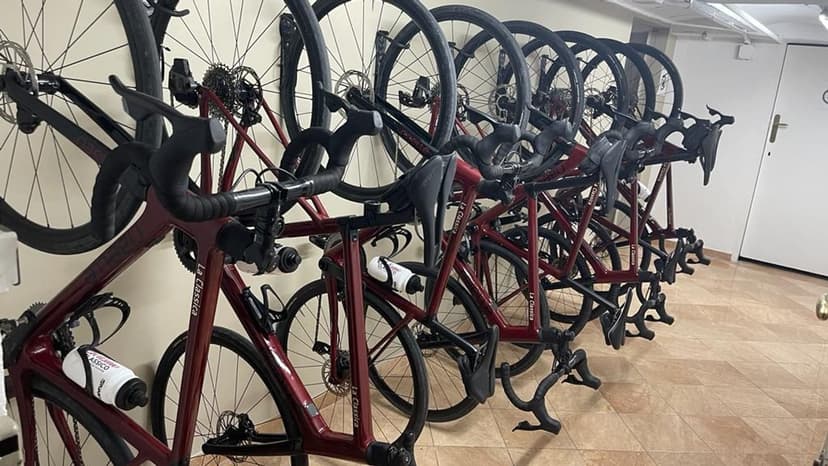
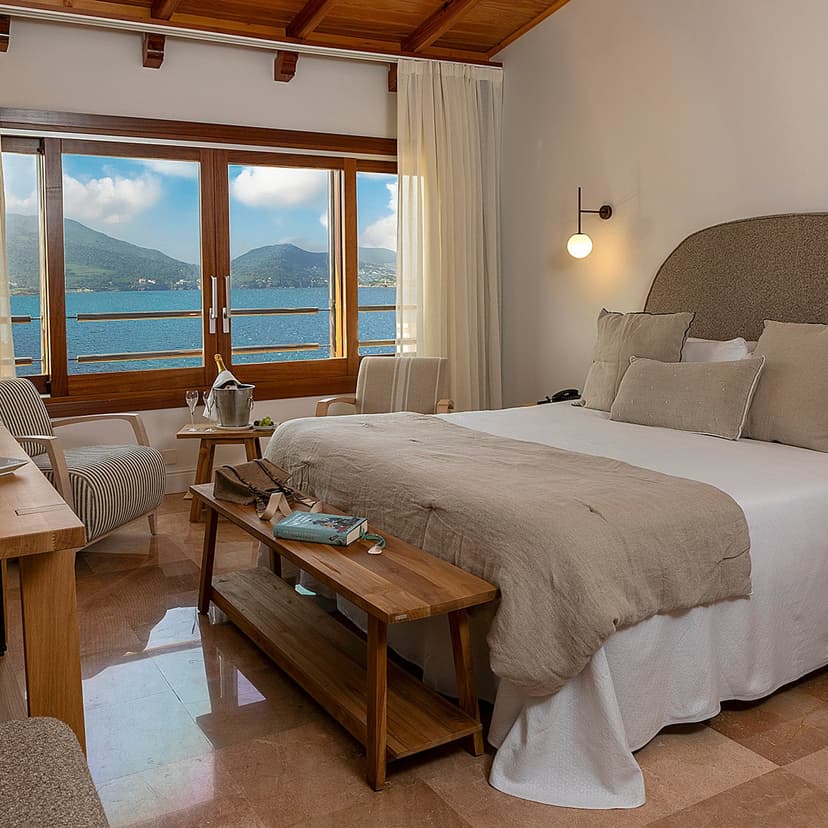
Stay in the old town if you want the cafés and the group rides on your doorstep, in the Sant Daniel valley if you want to roll straight into the Gavarres, or on the coast if your week is mostly route 3 and route 5. A hotel with a locked bike room and an early breakfast matters more than the star rating. The hotels we book, with bike storage and workshop facts checked, are on Cycling Hotels in Girona.
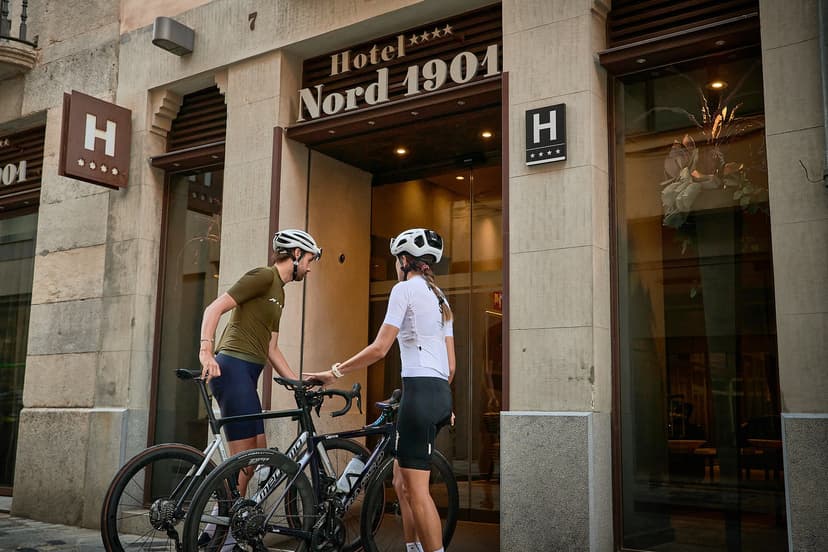
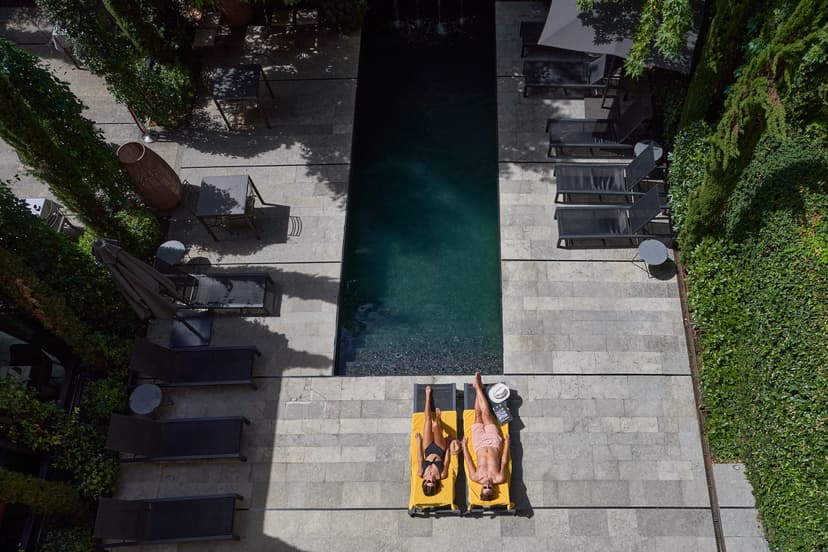
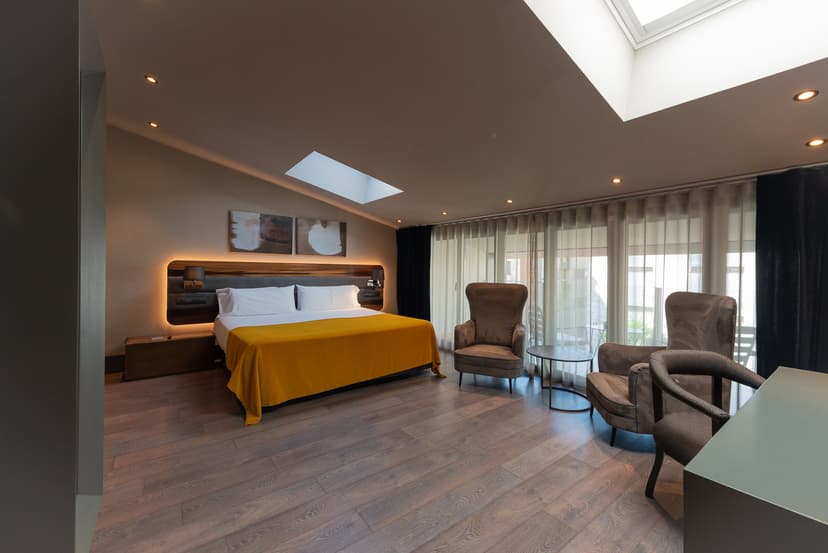
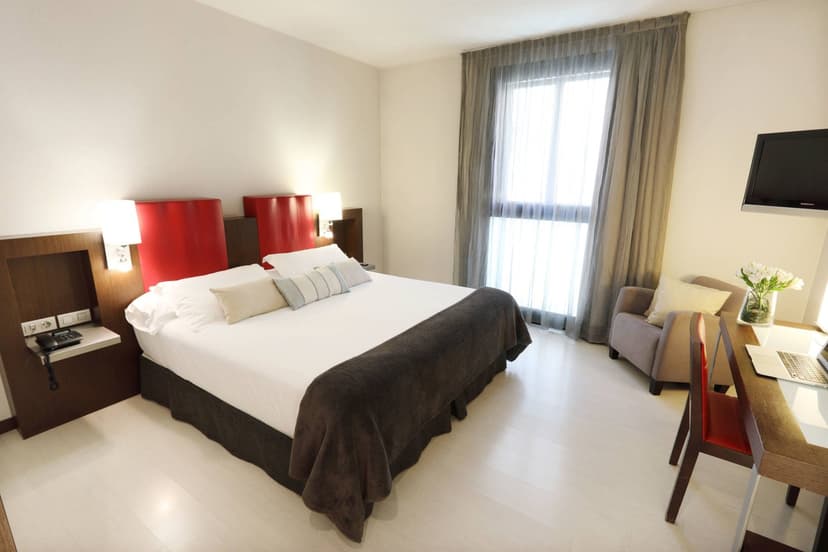
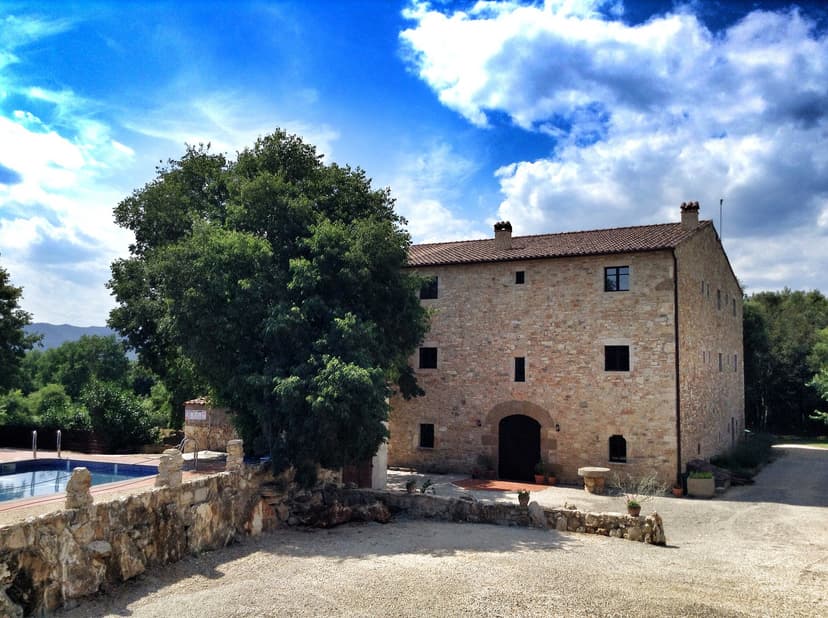
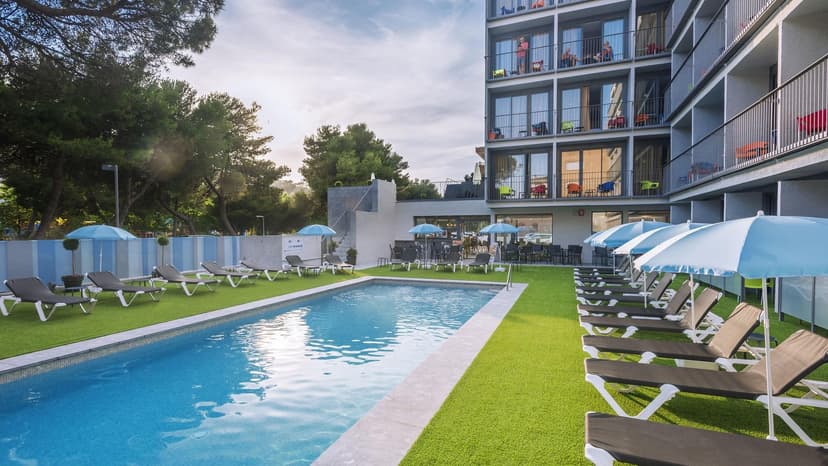
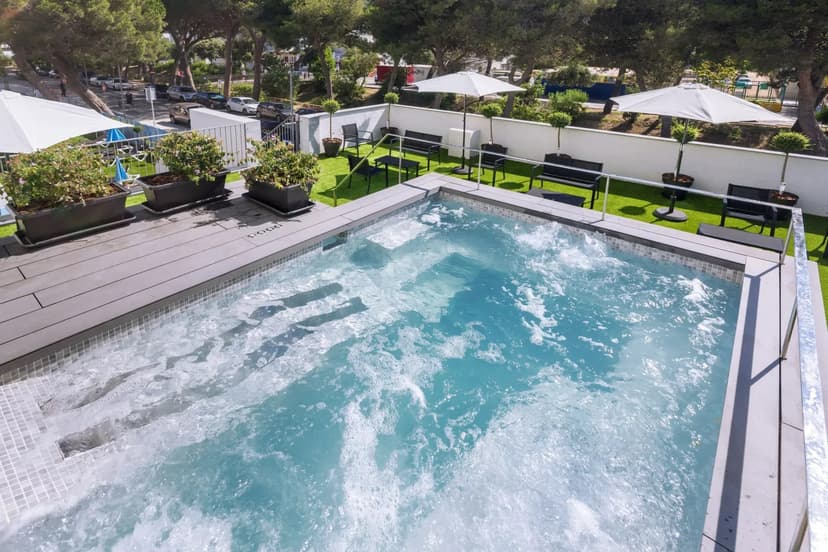
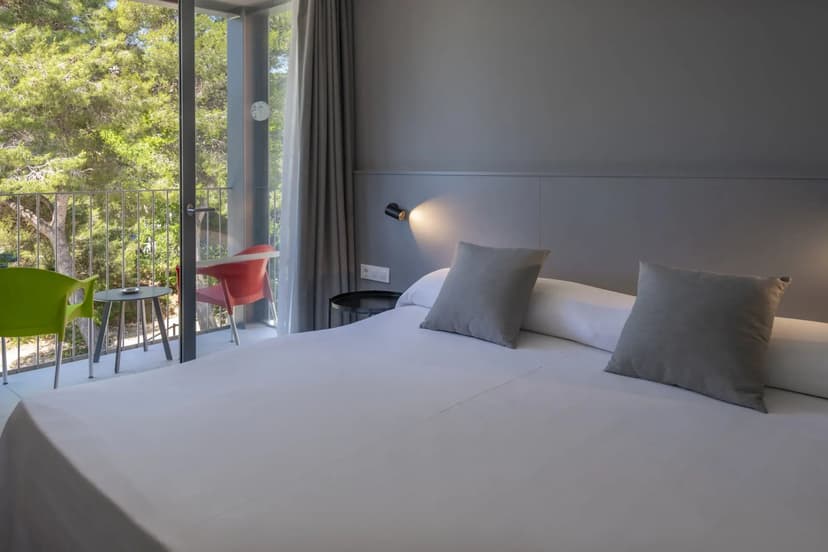
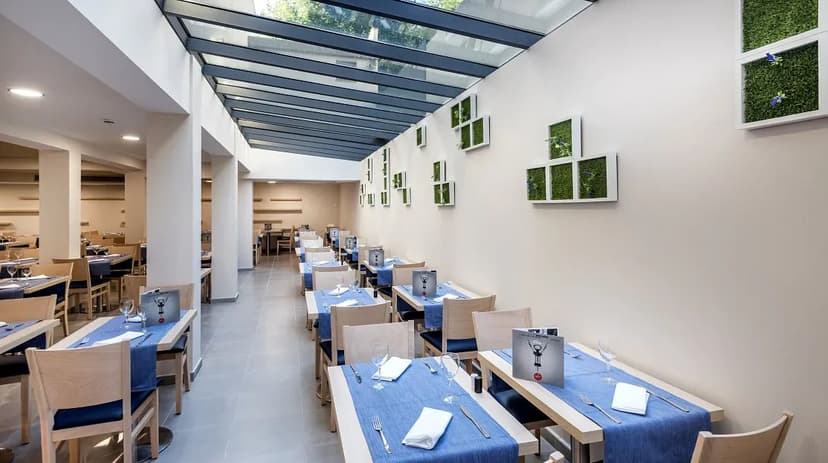
For a riding week we would book one of these five, because each describes its own bike setup: two in Girona's old town, a masia in Serinyà and two on the coast.
FAQ
Which Girona ride should I do first?
Els Àngels. Fifty-five kilometres, one gentle climb, a terrace with a view, and you are back for lunch.
How hard is Rocacorba?
Hard enough that the pros use it as a test and gentle enough that any fit rider can finish it. The full section-by-section breakdown is on the Rocacorba page.
Can I ride these routes without a road bike?
Routes 1 to 6 are paved and fine on any road or endurance bike. Route 7 is packed gravel: a gravel, touring or hybrid bike is the better choice. The Gavarres tracks want 40 mm tyres.
Do I need to carry a lot of water?
On the plain, no — every village has a fountain or a bar. On the three big climbs, yes: fill both bottles in the last village, and in summer that means two full bottles for up to 22 km of climbing.
Is Girona good for a non-cycling partner?
Yes. The old town, the cathedral steps, the river houses and a train to Barcelona in under 40 minutes. The coast villages on routes 3 and 5 work the same way.
Can you plan a Girona trip around these routes for me?
Yes — that is what the tours on this page are, and we adapt them. Tell us your dates and how far you like to ride: send an inquiry.



Plan with a cycling expert
Free advice from a team that knows these routes inside out - real people, not a bot

Hassle-Free
We take care of route planning, accommodations, luggage transfers, and all logistics, so you can focus purely on enjoying your ride.

Tried & Tested Adventures
Our cycling routes are hand-picked & tested, to ensure breathtaking landscapes, smooth roads, and maximum safety - giving you the perfect ride every day.

Unbeatable Support
Our 24/7 customer support is where we show our passion, ensuring your cycling holiday runs smoothly and your well-being is always our top priority.

Book with Confidence
We are a financially protected company, fully bonded and insured, keeping your money safe and allowing you to travel with confidence.