Explore Tenerife by bike: iconic climbs, subtropical climates and sweeping Atlantic views in one of Europe's most rewarding cycling destinations.
Highlights
- Mount Teide: 48 km of climbing from the sea
- Pro training camp for Ineos, Visma | Lease a Bike, Movistar in January
- Year-round highs over 20°C on the south coast
- Volcanic black, banana green, pine forest in one ride
Tenerife Cycling Holidays
Explore Tenerife by bike: iconic climbs, subtropical climates and sweeping Atlantic views in one of Europe's most rewarding cycling destinations.
Highlights
- Mount Teide: 48 km of climbing from the sea
- Pro training camp for Ineos, Visma | Lease a Bike, Movistar in January
- Year-round highs over 20°C on the south coast
- Volcanic black, banana green, pine forest in one ride



Plan with a cycling expert
Free advice from a team that knows these routes inside out - real people, not a bot
About Cycling in Tenerife
Shaped by ancient volcanic activity and dominated by Spain’s highest peak, Mount Teide (3,715 m), Tenerife offers a cycling environment unlike anywhere else in the Canary Islands. Its combination of subtropical climate, steep elevation changes, and coastal plateaus creates a uniquely challenging setting for both amateur and experienced riders.
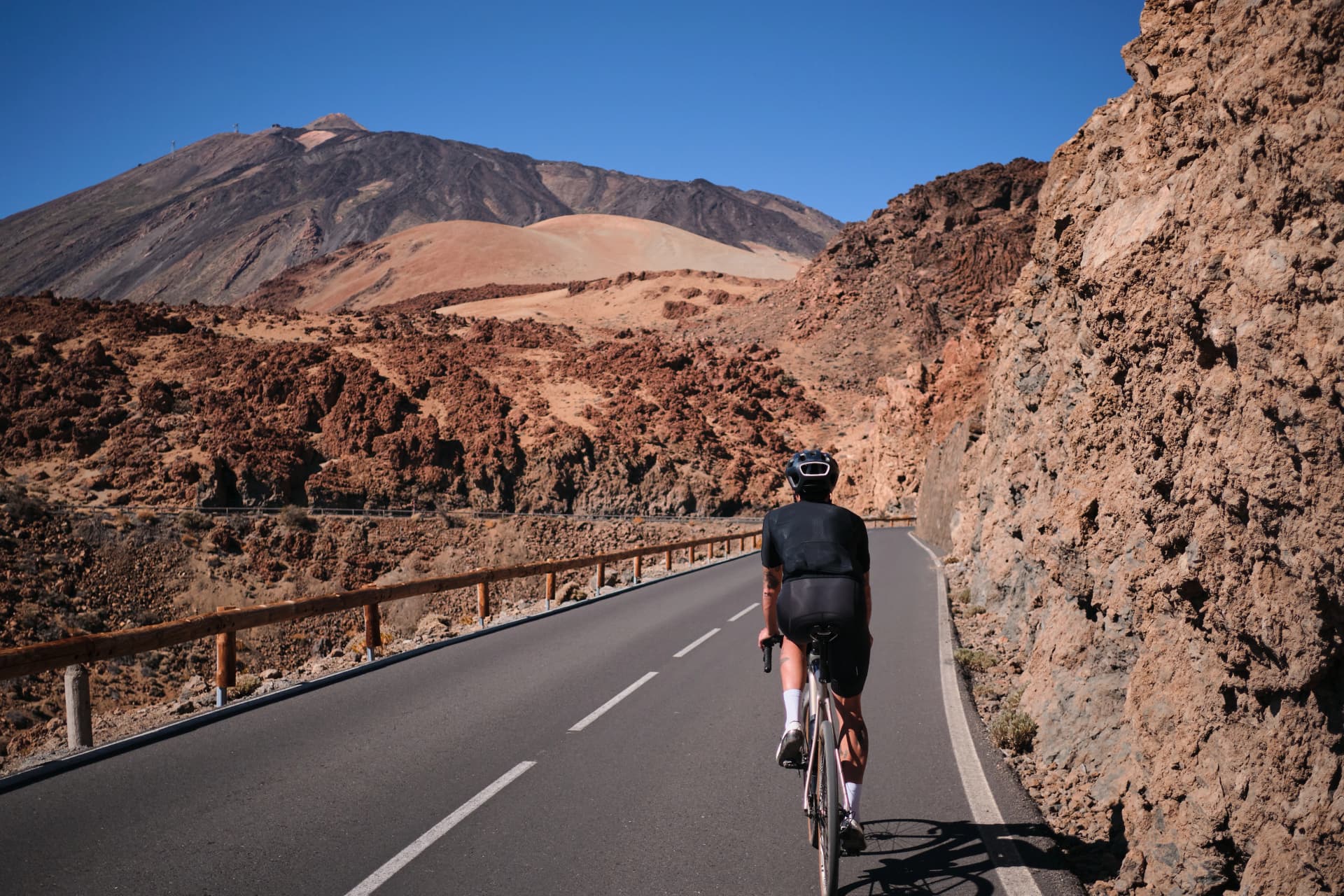
For cyclists, Tenerife stands out for its long, consistent climbs and diverse microclimates. The ascent to Teide National Park—used regularly by professional teams for altitude training—delivers more than 40 kilometres of uninterrupted climbing.
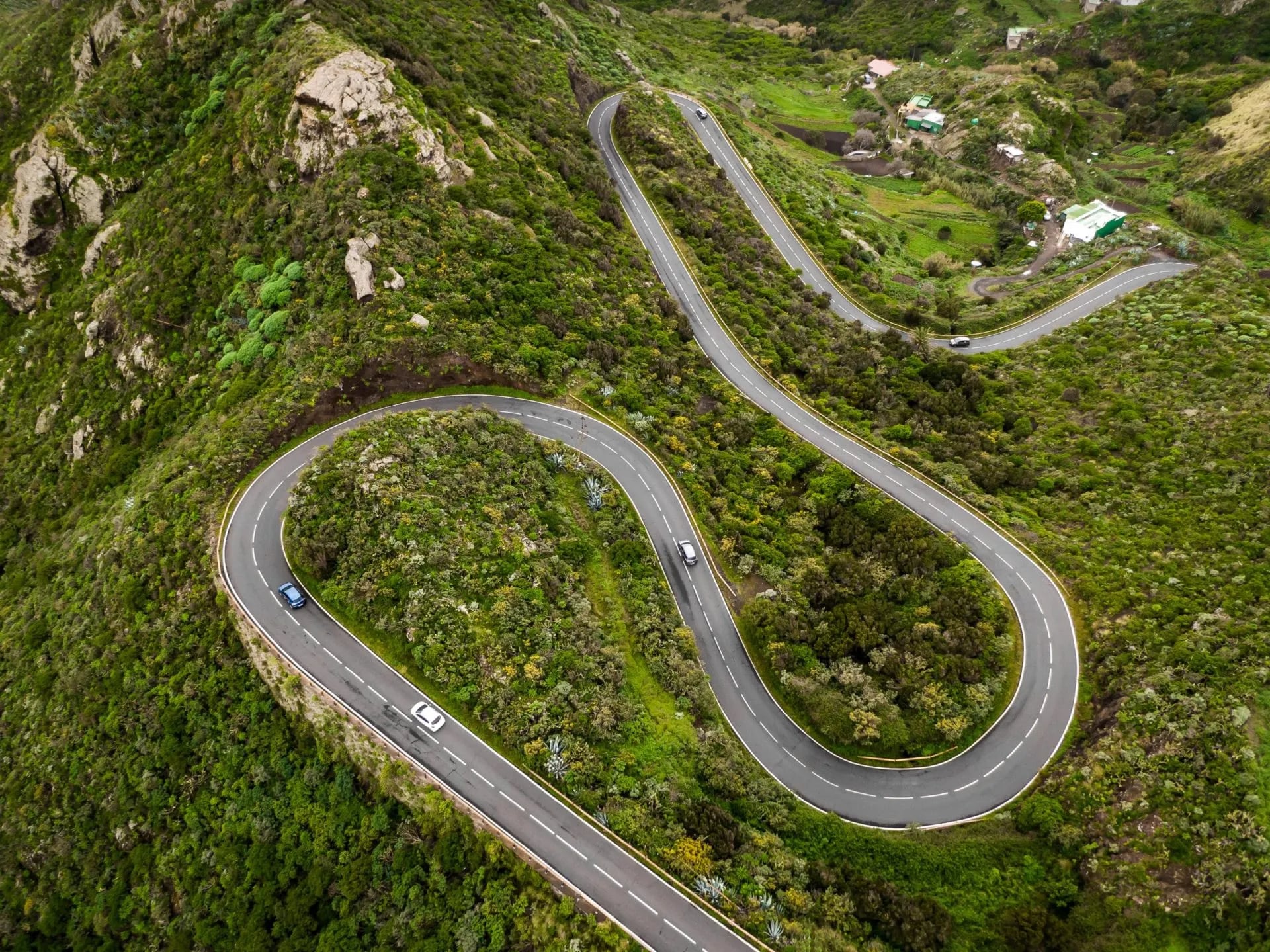
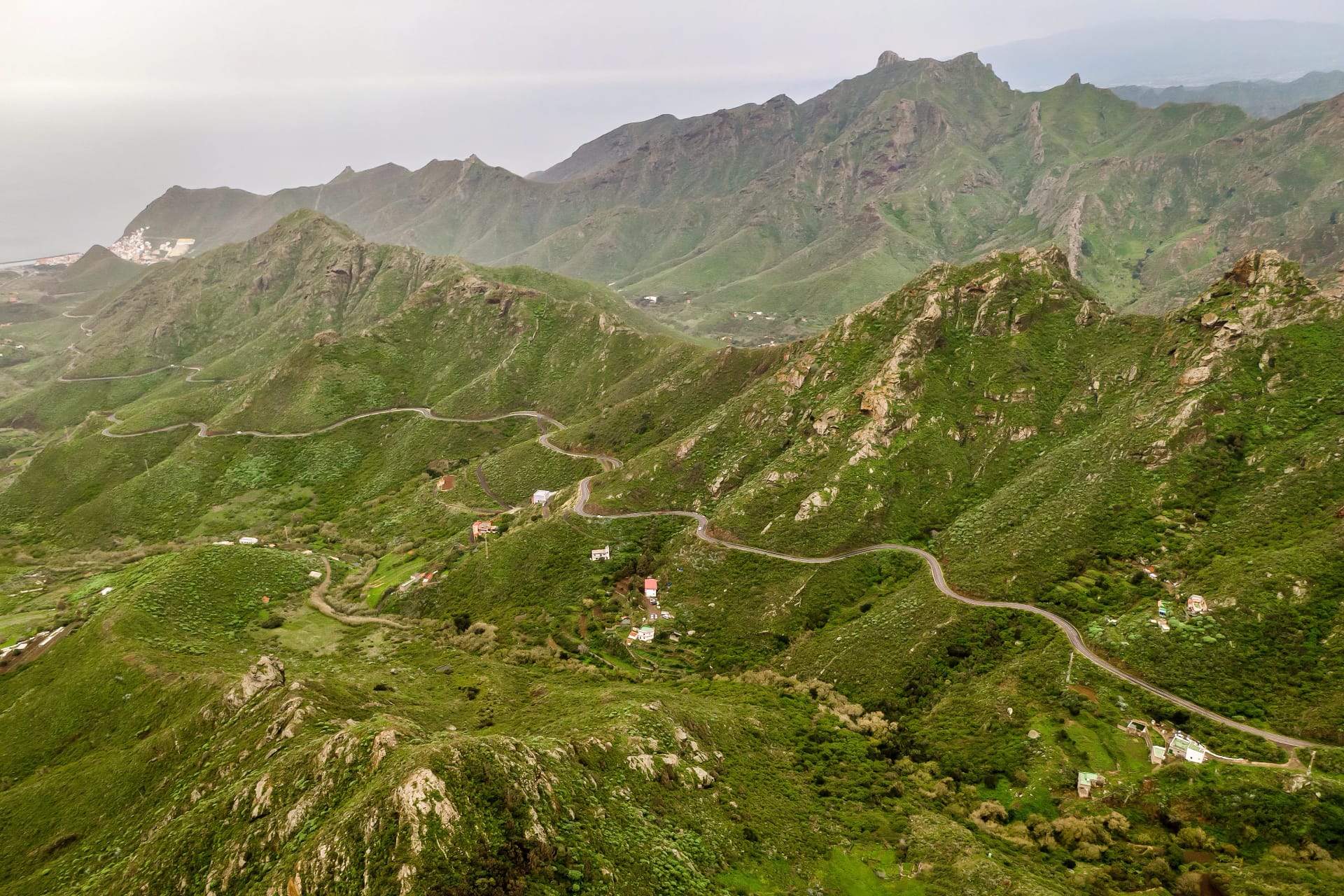
In contrast, the island’s northern valleys and the rugged ridges of Anaga offer short, sharp gradients and technical switchbacks carved into some of Europe’s oldest volcanic massifs.
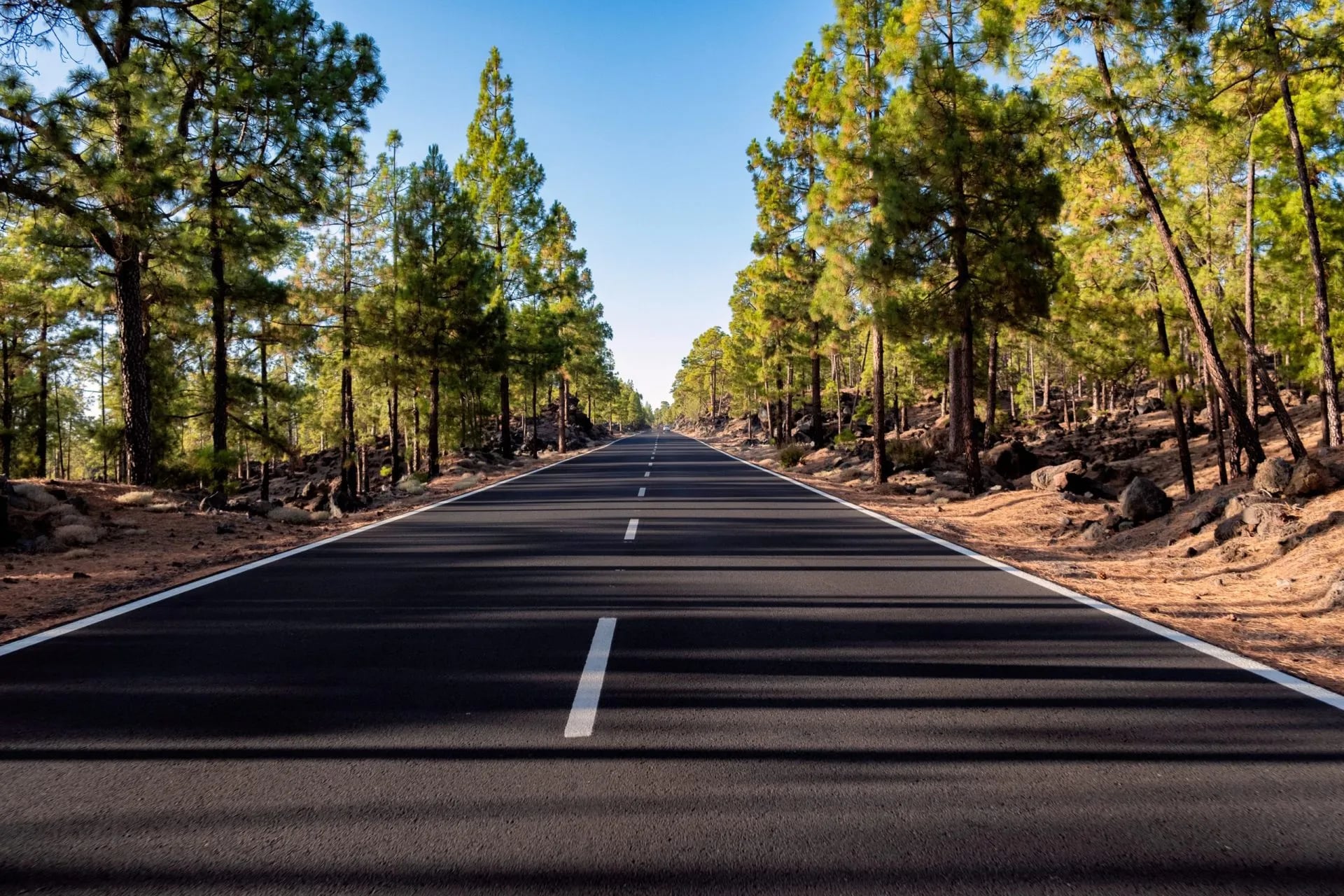
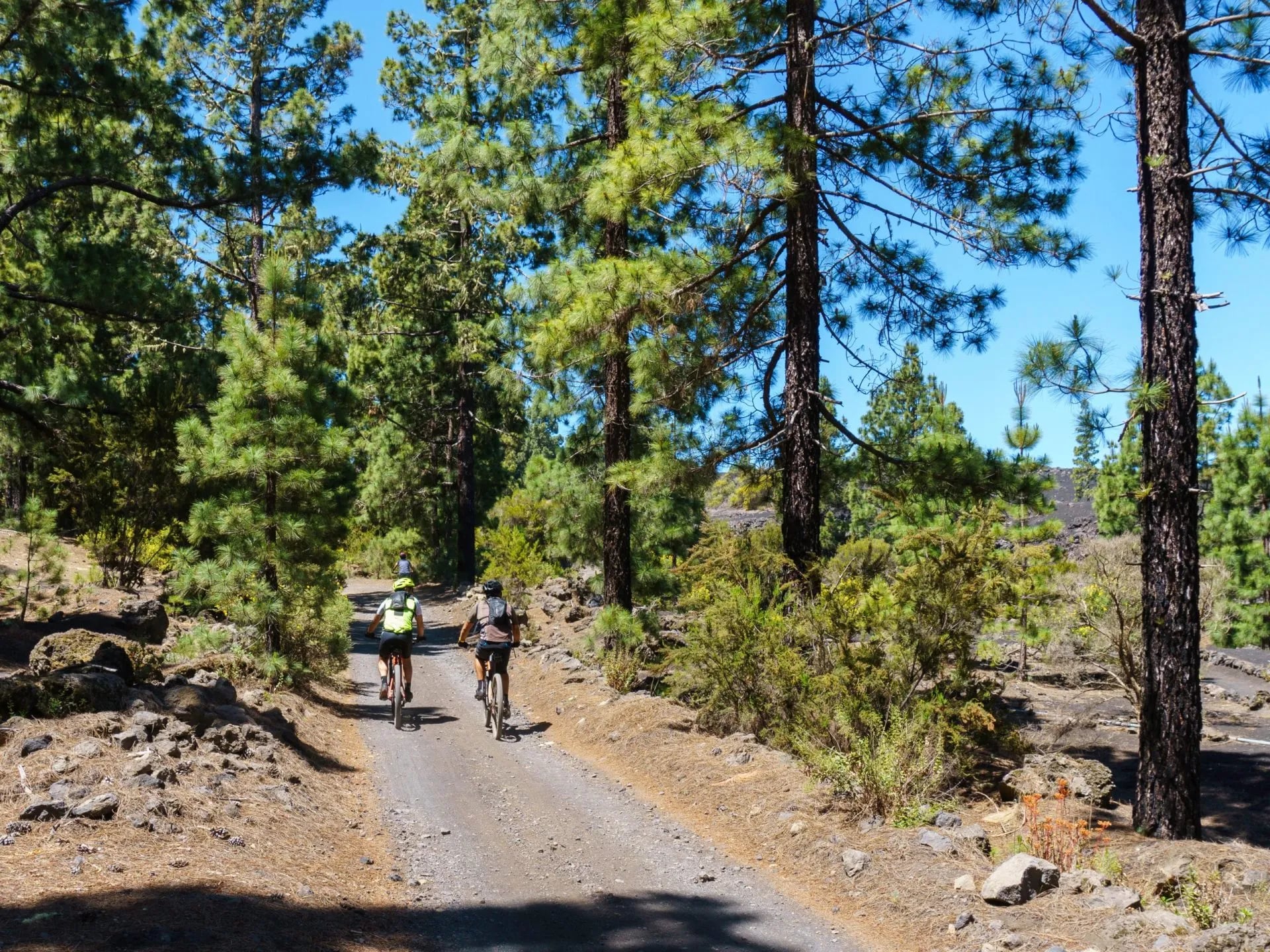
Routes cut across landscapes that shift quickly: pine forests at mid-altitude, black lava fields at higher elevations, and windy coastal roads near places like Los Gigantes and El Médano.
Local culture adds another layer to the experience. Historic towns such as Garachico—rebuilt after a major volcanic eruption in 1706—sit alongside small agricultural communities and coastal fishing districts. Riders often break in family-run guachinches to try dishes tied to northern Tenerife’s wine-growing tradition.
Whether your focus is steady endurance climbs, varied inland circuits, or coast-to-coast road touring in stable year-round weather, Tenerife offers terrain suited to every objective.
With well-maintained roads, reliable conditions, and some of the most distinctive geology in Spain, the island delivers a cycling experience that is both demanding and memorable—without feeling repetitive across routes.

Hassle-Free
We take care of route planning, accommodations, luggage transfers, and all logistics, so you can focus purely on enjoying your ride.

Tried & Tested Adventures
Our cycling routes are hand-picked & tested, to ensure breathtaking landscapes, smooth roads, and maximum safety - giving you the perfect ride every day.

Unbeatable Support
Our 24/7 customer support is where we show our passion, ensuring your cycling holiday runs smoothly and your well-being is always our top priority.

Book with Confidence
We are a financially protected company, fully bonded and insured, keeping your money safe and allowing you to travel with confidence.
What to Expect When Cycling in Tenerife?
2,358 m: the top of the road through Teide National Park. Climbfinder lists five ways up from sea level, 48 to 55 km each.
The one from Los Cristianos averages 5.1 % over 48.4 km.
Teide's summit is no bike ride. The Teide cable car climbs to 3,555 m, and the trail to the 3,715 m top needs a permit.
The Parador de Las Cañadas del Teide stands at 2,150 m, inside the national park. Elite teams block-book the Parador for altitude camps.
Visma | Lease a Bike, a partner of Canary Islands tourism, trains on Tenerife too. The Road Cycling Tour of Tenerife books a night at the Parador.
Sometimes. In March 2026, snow stranded Remco Evenepoel on Teide.
Up at Izaña, 2,369 m, afternoons average under 12 °C from November to April. The south coast is about 14 °C warmer in January.
Pack for the top as well as the coast:
Windproof jacket and full gloves
Arm and leg warmers for the descents
Month by month: our Canary Islands cycling guide →
Think Teide is the hard part? Its main approaches average about 5 %.
Masca's climb averages 11.2 %: 3.8 km up to Mirador de Cherfe, about 430 m in one go. Masca, once a Guanche settlement, sits at 650 m at the head of a gorge.
Climbfinder has the full Masca–Cherfe profile.
South: the coast averages 15 rain days a year, and almost none from May to September.
North: 64 rain days a year, most of them from October to April. Both road tours end on this side, around La Laguna and Santa Cruz.
The north is also guachinche country. Around Tacoronte and La Orotava, these simple family places serve their own wine with home cooking.
Each tour takes a different side of the island:
West, Teno and Masca: MTB Cycling Tour Tenerife
Teide and the north: Tenerife Road Climbing Challenge
Over Teide to La Laguna: Road Cycling Tour of Tenerife
The climbing challenge drops down the La Orotava valley to Puerto de la Cruz. From there it rides on to the Anaga hills, a UNESCO Biosphere Reserve.
The road tour starts in Santiago del Teide and passes the wine villages.